
Pickleball vs Padel: Can the Global Player Counts Establish a Winner?
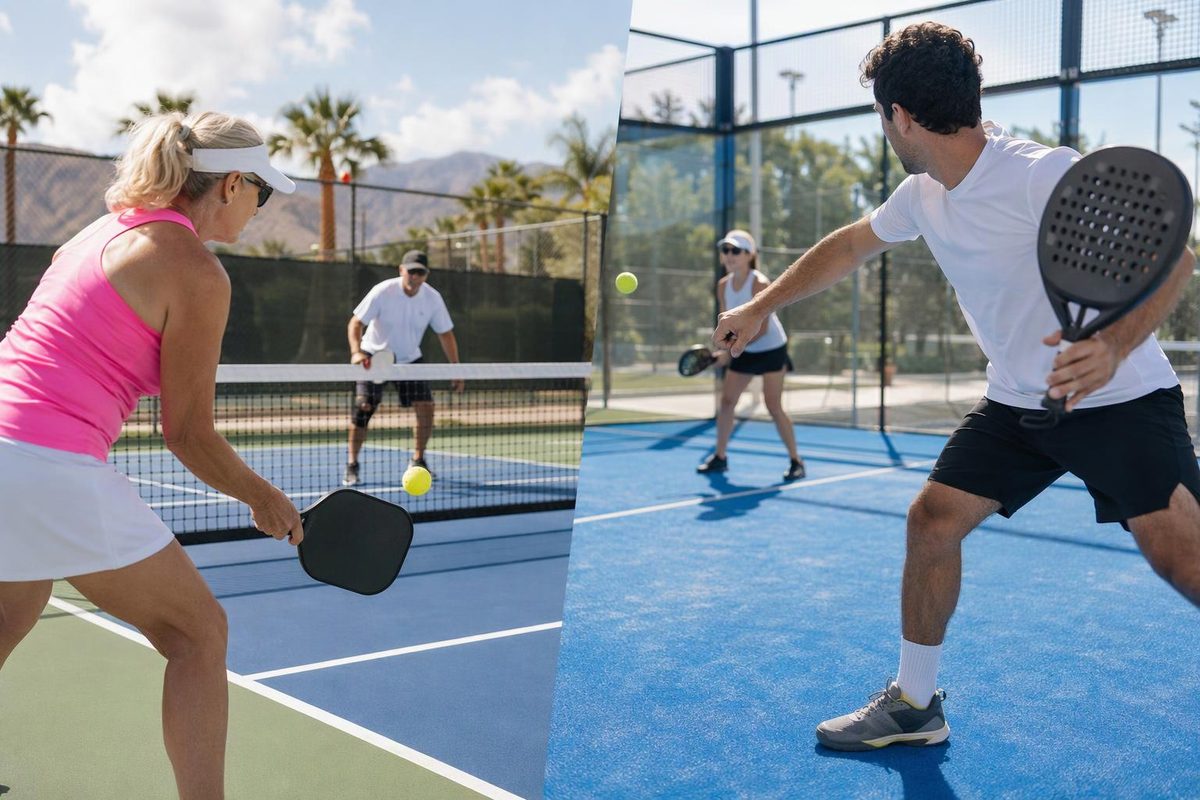
Padel estimates ~40 million players worldwide. Pickleball’s global total is less traceable. See why U.S. figures cannot settle the comparison.
As of November 2026, the figures below do not establish a defensible, like-for-like global winner. Padel has a documented federation estimate of ~40 million amateur players worldwide in 2026. Pickleball has a well-described U.S. survey estimate of ~24.3 million participants in 2025, but that is not a worldwide total. Comparing those two numbers would leave out every pickleball player outside the United States. (FIP World Padel Report 2026; SFIA participation data)
Global pickleball totals appear in media coverage, but their underlying methods need scrutiny before they can support a claim that either sport has more players.
The numbers—and their boundaries
| Figure | Geography and period | What it measures |
|---|---|---|
| Padel: ~40 million | Worldwide; participation updated September 2026 | Estimated amateur players who played at least once in the last year |
| Pickleball: ~24.3 million | United States; 2025 | Annual participation among Americans ages 6 and older, estimated through SFIA’s nationally representative survey |
| Pickleball: ~40–50 million reported | Worldwide; participation period not specified in the cited article | A reported range without a traceable global participation method in that article |
The first two figures come from FIP’s report and SFIA’s participation page. The third appears in a Times Now article claiming pickleball has overtaken padel. These rows are not three equally reliable inputs to a ranking.
What padel’s ~40 million actually counts
FIP’s player-population section defines its headline estimate as amateur players who played padel at least once in the last year. It is therefore a broad participation estimate, not a count of club members, licensed competitors or weekly players.
The report’s methodology says 65 nations supplied participation data through its National Federation Survey 2026. Sources varied: federation databases, secondary sources and estimates. FIP supplemented missing responses and non-affiliated countries through its own data and analysis. The global total is thus a synthesis of national information—not a single worldwide household survey or an exact census. (FIP report, player-population and additional-information sections)
That distinction matters when quoting the number. “FIP estimates ~40 million annual amateur padel players worldwide” is more accurate than “padel has exactly 40 million registered players.”
Why the reported global pickleball lead is not settled
Times Now reports ~40–50 million pickleball players globally and compares that range with ~30–35 million padel players. However, it attributes the global pickleball range only to “recent participation reports,” without identifying a worldwide survey, sampling population or calculation. Its named SFIA figure concerns the United States, not the world. (Times Now)
The padel benchmark also matters: the range used in that comparison is below FIP’s September 2026 estimate of ~40 million. Even if the reported pickleball range were accepted, its lower end would be roughly level with that padel estimate—not evidence of a clear lead.
SFIA’s ~24.3 million U.S. estimate has a much clearer methodological foundation: more than 18,000 Americans ages 6 and older are surveyed annually, with results weighted to U.S. Census demographics. That makes it useful for U.S. participation analysis. It does not validate an extrapolation to a global total. (SFIA methodology)
Keep frequent players separate, too
FIP estimates that ~27 million padel players participate weekly or every two weeks. SFIA reports ~7.5 million U.S. CORE pickleball players, defined as playing eight or more times in 2025. The geography and frequency thresholds both differ; those figures cannot establish which sport has more regular players worldwide. (FIP report; SFIA CORE definition)
For a worldwide comparison, these sources provide a documented padel estimate and an unresolved pickleball total—not a verified winner. For the separate U.S. comparison, see pickleball versus padel participation and growth.