
Pickleball Lost the Latest Growth Race but Still Dominates
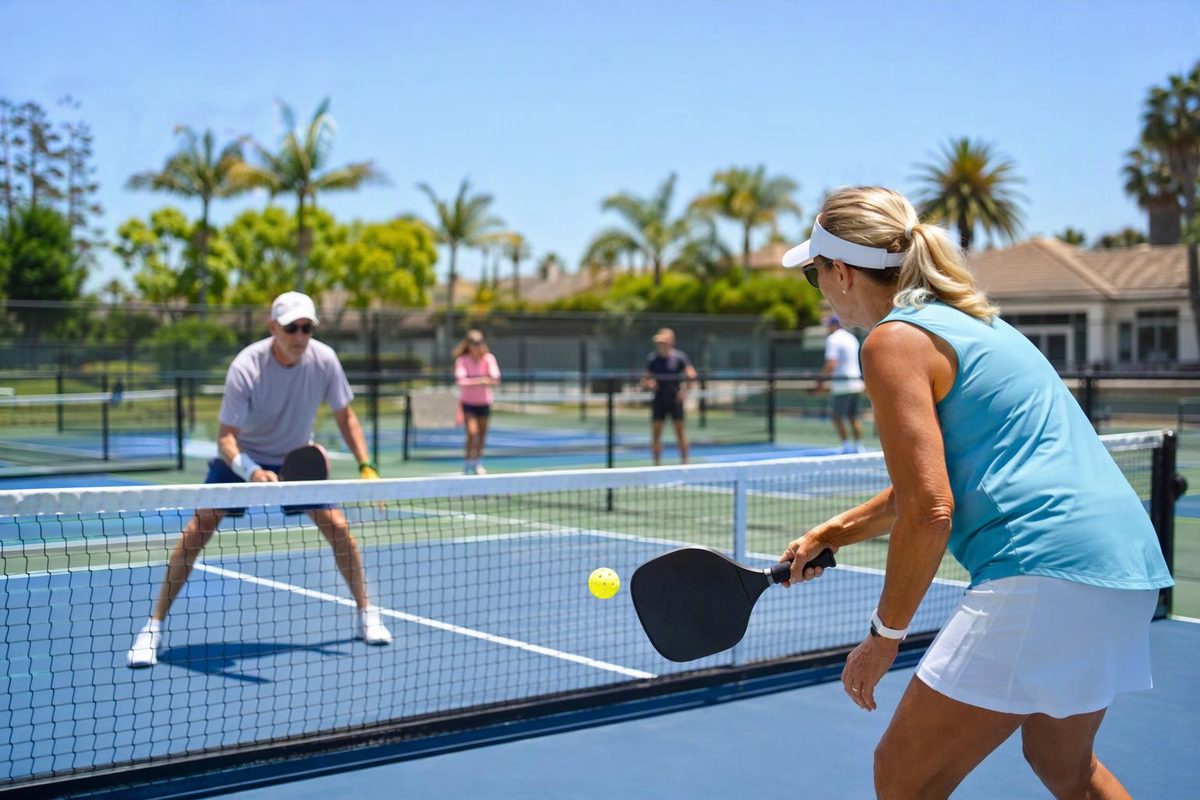
SFIA’s latest data puts padel ahead on percentage growth, while pickleball’s 24.3 million U.S. participants preserve a huge lead in overall scale.
No—not in SFIA’s newest short-term comparison. Padel’s U.S. participation grew 14.5% in the rolling 12 months ending June 2026, versus 1.3% for pickleball. Pickleball still holds SFIA’s fastest-growing title over the longer 2022–2025 window, when its estimated participation rose 171.8%.
| Question | Period | Answer |
|---|---|---|
| Which grew fastest over three years? | 2022–2025 | Pickleball |
| Which grew faster most recently? | 12 months ending June 2026 | Padel: 14.5% vs. 1.3% |
| Which had more U.S. participants? | 2025 | Pickleball: 24.3M vs. padel: ~1.07M |
The two findings are not contradictory. They measure different periods, and percentage growth does not indicate which sport has the larger participant base.
Adjust the rates or starting populations to see how the participation gap compounds.
Participation Growth Scenario
Compare compounded growth for up to 10 years using SFIA’s reported starting estimates and latest rates.
Edit Starting Participation
At unchanged rates, padel would first exceed pickleball after 26 years—not within the selected 10-year period.
| Point | Pickleball | Padel |
|---|---|---|
| Starting point | 24.30M | 1.07M |
| Year 1 | 24.62M | 1.23M |
| Year 5 | 25.92M | 2.11M |
| Year 10 | 27.65M | 4.14M |
Source: SFIA participation data. Starting values are 2025 estimates; rates cover the rolling 12 months ending June 2026. Results are scenarios, not forecasts.
The calculator is a scenario rather than a forecast. It applies the latest reported growth rates repeatedly to the 2025 participation estimates, even though annual growth rarely remains constant for a decade. Its purpose is to show why a smaller sport can grow much faster without approaching pickleball’s total participation.
Pickleball Still Leads SFIA’s Three-Year Ranking
SFIA estimates that U.S. pickleball participation increased from about 4.2 million people in 2020 to 24.3 million in 2025, a 479% increase. It also reports 171.8% growth from 2022 through 2025 and identifies pickleball as the country’s fastest-growing sport over that three-year span (SFIA participation statistics).
When SFIA released its 2026 pickleball report in June, it said pickleball had been the nation’s fastest-growing sport for five consecutive years. That report covered participation during calendar year 2025, not the rolling period that ended midway through 2026 (SFIA’s June 2026 release).
A faster result for padel in a newer, shorter period does not erase pickleball’s historical lead. It means the phrase “fastest-growing sport” now requires a measurement window. Pickleball leads the latest three-year comparison; it does not lead the latest 12-month comparison.
Padel is also newer to SFIA’s national tracking. SFIA began tracking it nationally in 2025, so padel does not yet have a directly comparable five-year national series. Its 14.5% result describes recent momentum, not a victory over pickleball across the same years that produced pickleball’s five-year streak.
Padel Leads the Latest Percentage-Growth Comparison
SFIA’s August 2026 midyear release reported 14.5% participation growth for padel and 1.3% for pickleball. SFIA called padel the fastest-growing activity highlighted in the report and described pickleball’s result as its “first sign of moderation” after five years at the top (SFIA’s August 2026 releases).
The underlying measure was a rolling 12-month participation rate ending in June 2026, according to Sports Business Journal’s account of the report.
The most accurate current wording is:
Pickleball remains the fastest-growing U.S. sport over SFIA’s latest three-year window, but padel grew faster in SFIA’s newest midyear comparison.
Saying only that pickleball “is still the fastest-growing sport” omits the change in the newest data. Saying padel has “overtaken pickleball” is also misleading unless the claim is explicitly about percentage growth during that rolling 12-month period.
A 1.3% gain still represents growth. It indicates that pickleball’s expansion slowed substantially; it does not show participation declining. That distinction is examined further in Is Pickleball Growth Slowing Down? Yes—Not Declining.
Pickleball’s Participant Base Remains About 23 Times Larger
Padel’s 14.5% gain starts from a much smaller participation estimate. For calendar year 2025, SFIA estimated approximately 1.07 million U.S. padel participants and 24.3 million pickleball participants. Pickleball’s estimate was roughly 23 times as large.
Growth rate and participation size answer separate questions:
- Growth rate measures the change relative to a sport’s starting population.
- Participation size estimates how many people met the survey’s participation definition.
A small sport can post a large percentage gain with a comparatively modest increase in people. A much larger sport can add more people while recording a lower percentage rate. SFIA’s public midyear figures do not provide participant totals by sport, so the 14.5% and 1.3% rates alone cannot establish how many participants padel or pickleball added during that rolling period.
The calculator illustrates the scale difference without filling that evidence gap. Starting with 24.3 million and 1.07 million participants, then compounding the reported rates for 10 years, produces approximately 27.65 million pickleball participants and 4.14 million padel participants. Those are mathematical scenario results, not SFIA forecasts.
If both starting populations and both rates stayed unchanged, padel would not pass pickleball by 2036. The first annual crossover would occur 26 years after the starting point. That distant result depends entirely on the unrealistic assumption that 14.5% and 1.3% persist every year.
SFIA Reports Population Estimates, Not Player Registrations
SFIA’s annual participation figures come from research conducted with the Physical Activity Council. SFIA says the study includes 18,000 online interviews with people age six or older. Its nationwide sample is weighted to represent the U.S. population by gender, age, income, ethnicity and region (SFIA methodology and participation data).
The 24.3 million figure is therefore a population estimate. It is not a count of memberships, app profiles, tournament entries or unique people observed on courts. The same distinction applies to padel’s estimated 1.07 million participants.
SFIA separately estimated 7.5 million “core” pickleball participants in 2025, defining core participants as people who played at least eight times during the year. That figure addresses frequency, while the broader 24.3 million estimate includes everyone who met SFIA’s annual participation threshold.
The evidence supports three distinct statements: pickleball led SFIA’s three-year growth ranking through 2025, padel led the rolling 12-month percentage comparison ending June 2026, and pickleball remained far larger by estimated U.S. participation. Claims that collapse those three measurements into a single “fastest-growing” label leave out the period or metric that determines the answer.