
104,828 Members, ~24.3 Million Players: Why Both Figures Are Correct
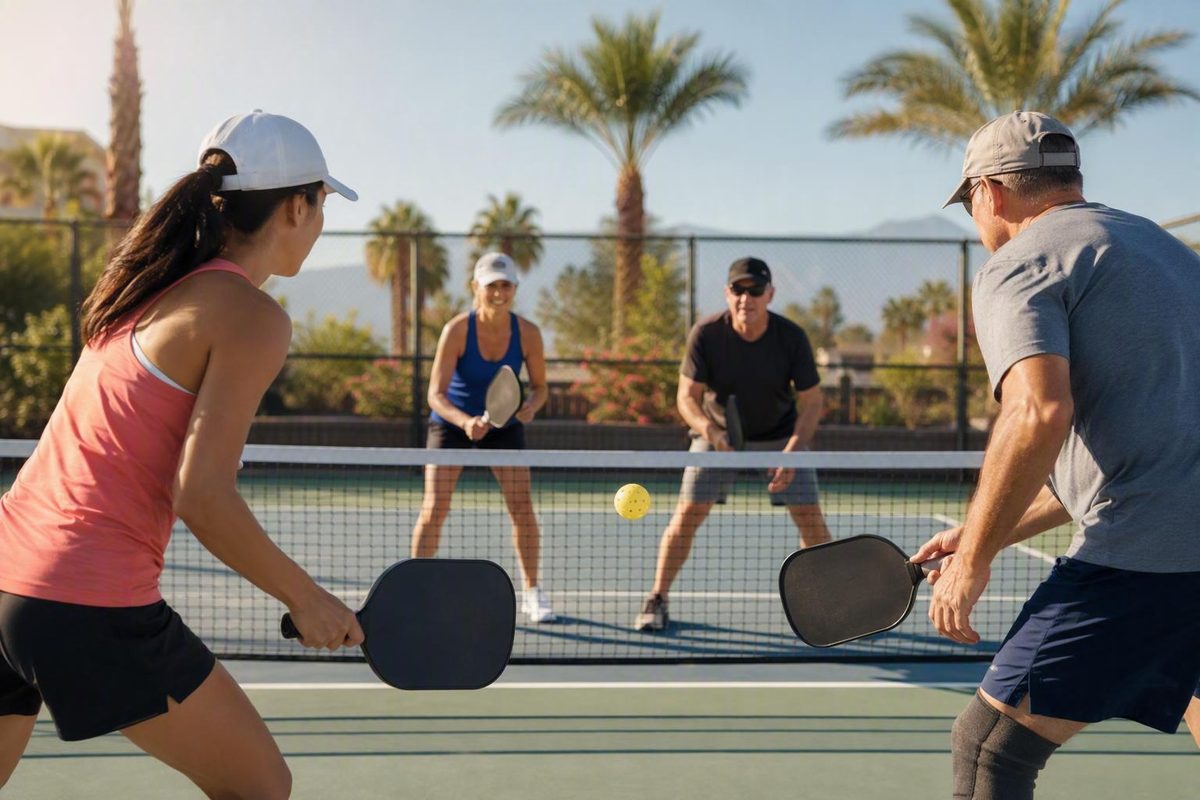
USA Pickleball reported 104,828 members; separately, SFIA estimated ~24.3 million Americans played, answering two different questions.
USA Pickleball reported 104,828 members nationwide in 2025, up from 62,260 in 2024, according to its annual growth report.
Separately, the Sports & Fitness Industry Association estimated that ~24.3 million Americans played pickleball in 2025 through national participation research. SFIA’s figure is a survey-derived estimate, not a registration total or census.
The figures answer different questions. One describes membership in a particular organization; the other estimates how many Americans played during the year. Neither should be relabeled as the other.
The short answer: membership and participation side by side
USA Pickleball’s total measures the size of its reported membership community. SFIA’s estimate covers people who played pickleball, whether or not they joined an organization, entered a tournament or played regularly.
| Metric | 2024 figure | 2025 figure | Population, method and principal caveat |
|---|---|---|---|
| USA Pickleball membership | 62,260 | 104,828 | USA Pickleball members; an organizational total reported in its annual report. The report does not define whether this means active members at year-end, everyone who held membership during the year, paid accounts or unique individuals. |
| U.S. pickleball participation | ~19.8 million | ~24.3 million | Americans who played; a survey-derived population estimate rather than a registration count or census. The 2024 figure comes from Pickleheads’ summary of SFIA research, while SFIA reports the 2025 total directly. |
Conversely, the participation estimate does not mean that ~24.3 million people registered with USA Pickleball.
A defensible comparison keeps three labels beside each number:
- Reference year: 2024 or 2025.
- Population measured: USA Pickleball members or Americans who played.
- Measurement type: organizational record or survey estimate.
Those labels prevent a technically accurate figure from becoming misleading when quoted without context.
USA Pickleball membership increased ~68.4% in one year
USA Pickleball reported 62,260 members for 2024 and 104,828 for 2025. Using those reported inputs, the one-year increase was:
104,828 - 62,260 = 42,568
104,828 - 62,260 ÷ 62,260 × 100 ≈ 68.4\%
The ~68.4% growth rate and 42,568-member increase are editorial calculations from USA Pickleball’s published totals. They are not growth figures quoted by the organization.
The increase is substantial, but the available report does not explain its composition. It does not define whether the 104,828 total represents active members on December 31, everyone who held membership at some point during 2025, paid members, accounts or unique individuals.
The two annual figures therefore cannot show whether growth came primarily from first-time members, improved retention, changes in counting practices or expansion within a particular membership tier.
The totals also do not establish what caused the increase. USA Pickleball discusses programming, benefits, partnerships and sanctioned events in its report, but the published membership numbers do not isolate the effect of any one activity.
The supported conclusion is narrower: USA Pickleball’s reported membership rose from 62,260 in 2024 to 104,828 in 2025, which produces an editorially calculated increase of ~68.4%.
What SFIA’s ~24.3 million participant estimate measures
SFIA’s ~24.3 million figure estimates how many Americans played pickleball in 2025. It is not a database of registered players, an exact head count or a measure of USA Pickleball membership.
SFIA says its annual participation research is conducted with the Physical Activity Council. The research uses approximately 18,000 respondents ages six and older, with data collected monthly, to estimate participation across the broader U.S. population. SFIA also reports that participation rose from ~4.2 million people in 2020 to ~24.3 million in 2025—a 479% increase specifically over the 2020–2025 interval.
Because the result is extrapolated from survey responses, the leading tilde matters. The supplied public summary does not reproduce confidence intervals, detailed weighting rules or the complete screening criteria used to classify someone as a participant.
A separate commercial summary by Pickletile divides the 2025 estimate into two frequency groups:
- ~16.8 million casual players, defined as people who played one to seven times during the year.
- ~7.48 million core players, defined as people who played at least eight times during the year.
Those figures and thresholds come from Pickletile’s third-party summary of SFIA data, not from the supplied public SFIA page itself. The two groups sum to approximately the headline total after rounding.
“Casual” and “core” describe playing frequency. They are not USA Pickleball membership tiers, and neither category establishes whether someone belonged to the organization.
The segmentation also explains why the full ~24.3 million estimate should not be described as the number of regular or committed players. A person who played several recreational games during the year could qualify as a casual participant without entering a tournament or purchasing a membership.
SFIA’s reported 479% growth must likewise remain attached to its stated period. It covers 2020 through 2025 and should not be presented as the growth rate for 2024–2025, 2022–2025 or any other interval.
Why the membership count is only a small fraction of participation
Recreational players generally do not need to belong to USA Pickleball simply to play. A person can participate through public courts, private facilities, schools, recreation programs, informal groups or games with friends without holding national organizational membership.
Consider someone who played five times at a local park during 2025. Under the cited frequency definition, that person could be included among casual participants. Nothing about those five sessions establishes that the player also joined USA Pickleball.
Membership becomes more directly relevant for certain services and competitive pathways. USA Pickleball lists Casual, Challenger and Champion memberships, and its membership page states that sanctioned-tournament eligibility requires an active Challenger or Champion membership. That gives some tournament players a practical reason to join, but it does not apply to every recreational participant.
Using the reported membership total and estimated participant total gives this scale comparison:
104,828 ÷ 24,300,000 × 100 ≈ 0.43\%
Reported membership was therefore ~0.43% of estimated 2025 participation. This is an editorial calculation, not an exact membership-penetration rate. It compares an organizational total with a survey estimate, and the precise basis of the membership count is not defined.
A second comparison uses the estimated core-player group:
104,828 ÷ 7,480,000 × 100 ≈ 1.4\%
Reported membership was ~1.4% of the estimated core-player population. The same limitation applies: this ratio compares two differently constructed measures. It does not show that all remaining core players rejected membership, lacked tournament interest or were eligible to join.
For an occasional tournament player, the practical question may be whether sanctioned-event eligibility and other membership features justify renewal. A Reddit post raising that question illustrates an individual decision, but it is anecdotal and provides no representative evidence about member sentiment, renewals or churn.
The numerical gap is therefore unsurprising. Playing pickleball and belonging to USA Pickleball are separate activities with different thresholds.
A checklist for comparing pickleball player counts
Before comparing two pickleball statistics, identify five elements:
- Source: Who produced the figure—USA Pickleball, SFIA, APP, a tournament operator, a facility platform or another organization?
- Reference year: Does it cover 2023, 2024, 2025 or a multi-year period?
- Population: Does it measure people who played, U.S. adults, participants ages six and older, organizational memberships or tournament entrants?
- Activity threshold: Did someone need to play once, play at least eight times, enter an event or meet another test?
- Measurement type: Is the figure an administrative record or a survey-derived estimate?
The unit of measurement matters as much as the total. People, memberships, casual participants, core participants and tournament entrants are not interchangeable. Courts and playing locations are also distinct: one location can contain multiple courts, and database listings may not represent a complete, independently verified inventory of operating capacity.
Reference years should remain aligned whenever possible. Comparing 2024 membership with 2025 participation mixes periods unnecessarily when same-year figures are available. Similarly, SFIA’s reported 479% increase from 2020 to 2025 cannot be substituted for growth over a shorter or differently defined interval.
Different participation studies should not be averaged together. APP estimated that ~48.3 million U.S. adults played pickleball in 2023, while SFIA has published materially different estimates for other years and covered populations. The APP and SFIA figures use different years, definitions, populations and methods, so their difference does not prove that either result is a census or that one organization failed to count millions of registered players.
For reporting, research or facility planning, retain each statistic’s original label. Membership can describe an organization’s reported reach. Casual and core estimates can describe participation breadth and frequency. Tournament entries measure competitive activity. Court and location databases describe aspects of infrastructure. None is a universal substitute for the others.
The reusable formulation is:
USA Pickleball reported 104,828 members in 2025; separately, SFIA estimated that ~24.3 million Americans played pickleball in 2025.
That wording preserves the distinction: recorded organizational membership and survey-estimated national participation are different measures, even when they refer to the same year.